Do you know how to use WeChat Ecosystem for business?
Loading last updated info...
For many Western companies, WeChat feels like a messaging app.
In reality, it is one of the most important digital platforms in the Chinese-speaking world.
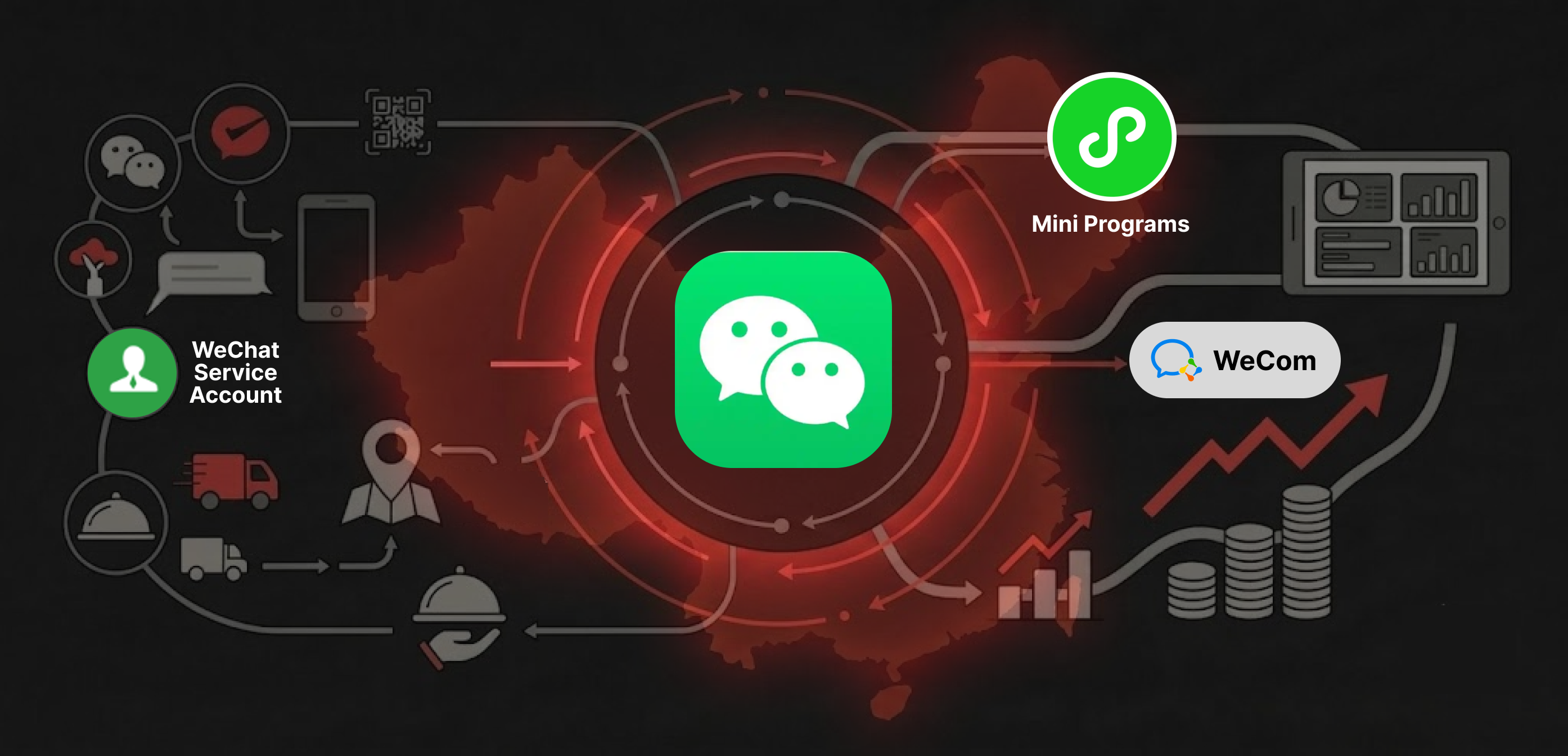
Figure: WeChat connects communication, commerce, payments, and customer engagement within a single ecosystem
With more than 1.4 billion monthly active users, WeChat has become a central channel for how Chinese consumers discover brands, communicate with businesses, make payments, and access digital services.
Since apps like Discord, Facebook, and WhatsApp are not readily accessible in mainland China, Chinese consumers have developed different digital habits around a different ecosystem.
For international businesses, understanding this ecosystem is often the first step to reaching Chinese consumers, both inside and outside mainland China.
1. 💡 WeChat Beyond Mainland China
While WeChat is a gateway into the Chinese market, many businesses also use it successfully to engage Chinese-speaking communities outside mainland China.
Across Australia, Singapore, Canada, the United States, Japan, and Europe, millions of Chinese-speaking residents and visitors rely on WeChat as their primary communication platform.
For these businesses, the goal is not to enter China; it is to reach customers through the platform they already use every day.
Common Examples
🏫 Private Schools & Childcare Centres
Chinese-speaking parents often prefer to receive updates via WeChat rather than email.
Schools can use a Service Account for announcements and event reminders, WeChat Groups for community engagement, and a Mini-Program for enrolments, event registrations, payments, permission slips, and photo sharing.
🏨 Tourism & Attractions
A hotel, museum, theme park, or tourist attraction can use a Mini-Program to sell tickets, manage bookings, and promote special events.
Moments Ads can target Chinese tourists before or during their trip.
🏥 Healthcare Providers
Medical clinics and hospitals can use a Service Account to send appointment confirmations, test result notifications, and follow-up reminders.
WeCom enables reception and patient support teams to communicate with patients through an official company-managed channel.
While WeChat is widely used to engage Chinese-speaking communities worldwide, its greatest commercial impact remains within mainland China.
2. 💡 WeChat in Mainland China
For businesses targeting customers in mainland China, WeChat is often the most important digital channel.
Unlike Western platforms where messaging, payments, content, and commerce are spread across multiple products, WeChat combines these into a single ecosystem.
Most overseas companies do not need every WeChat product from day one. A typical growth path looks like this:
WeChat (Personal) Account → Service Account → Mini-Program → WeCom → Moments Ads
This progression allows businesses to establish an official presence, deliver services and transactions, manage customer relationships, and eventually acquire customers through advertising.
Before looking at each product in detail, it is helpful to understand which parts of the WeChat ecosystem are available to overseas companies and which remain primarily limited to mainland China.
3. 🌏 WeChat Products
Available for Chinese Users Worldwide
| Product | Best For | Eligible for Overseas? | Typical Use Cases |
| WeChat Account | Required for authentication | ✅ Individual | Communicate with your Chinese audiences |
| WeChat Service Account | Official business presence | ✅ Company | Bank transaction alerts, shipping notifications, appointment reminders, customer service menus, links to your official website |
| WeChat Mini Program | Commerce & transactions | ✅ Company | Shopify-style stores, hotel booking apps, university portals, learning apps, event registration systems |
| WeCom | CRM & customer management | ✅ Company | Sales teams chatting with prospects, customer support agents, account managers maintaining client relationships |
| WeChat Moments Ads | Paid Acquisition | ✅ Company | Facebook/Instagram-style feed advertising to acquire customers |
Figure: Using Service Account, Mini-program and WeCom can take your business to the next level
Only For Chinese Users in China
| Product | Best For | Eligible for Overseas? | Typical Use Cases |
| WeChat Official Account | Content publishing | ❌ Company | Company news, industry articles, thought leadership content, product updates, employer branding |
| WeChat Store | Native commerce | ❌ Company | Selling products directly inside WeChat without building a custom e-commerce app |
| Livestream Commerce | Live selling | ❌ Company | Product launches, influencer-led sales events, live product demonstrations, flash-sale campaigns |
Figure: The above ones are primarily limited to mainland China
Now that we've covered the products available to overseas companies, let's look at how each one fits into a typical business strategy.
4. Decide if you need a Service Account 📧
Think of a WeChat Service Account as your company's official business presence inside WeChat.
Similar to WhatsApp Business, but with richer integration, content publishing, and customer service capabilities.
Overseas companies can register a Service Account using their local business license.
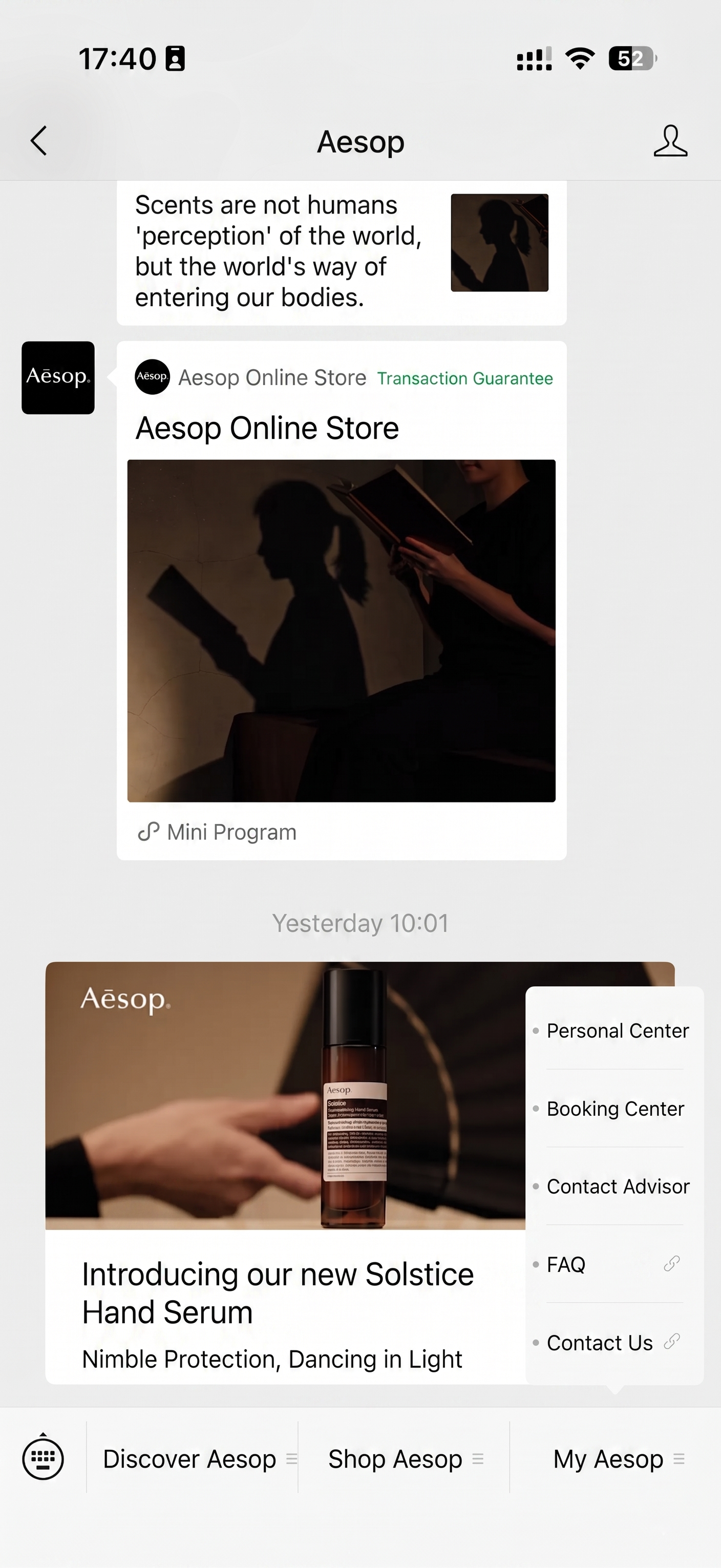
✅ Figure: Good example - Aesop's WeChat Service Account connecting users to services and transactions
Key Advantages of Service Account
- Powerful API Access - Send automated notifications, such as order confirmations, booking reminders, and payment updates. Connect your account to Mini-Programs, CRMs, and platforms like Microsoft Dynamics 365
- Direct External Linking - Use the custom menu to send users directly to your website, portal, or other online services
- Eligible for Moments Ads - Run WeChat Moments Ads through Tencent or an authorized agency, directing users to your Service Account, Mini-Program, or website
- Up to 4 Broadcasts per month - Send up to 4 article-style posts to all followers each month for content marketing and announcements
WeChat Pay is not automatically included. Overseas companies typically need a separate cross-border WeChat Pay merchant account to accept payments through WeChat.
5. Do you need a WeChat Mini-Program?⚙️
Think of a WeChat Mini-Program as a web app that runs directly inside WeChat. Whether it's an online store, a booking system, or a software product portal, users can access services, complete transactions, and engage with your business without downloading an app or leaving WeChat.
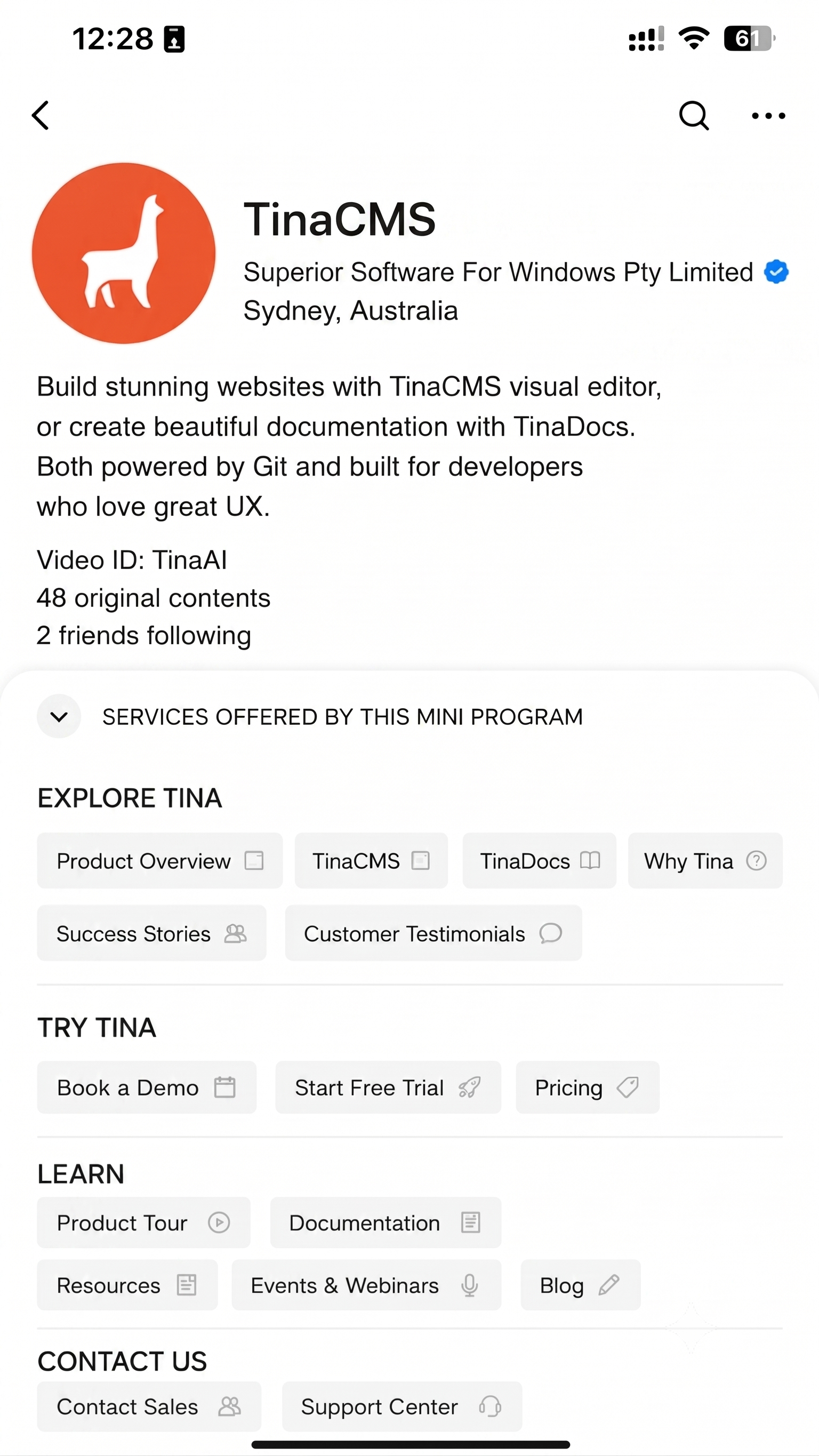
✅ Figure: Good example - TinaCMS Mini Program Integrated into the WeChat Ecosystem
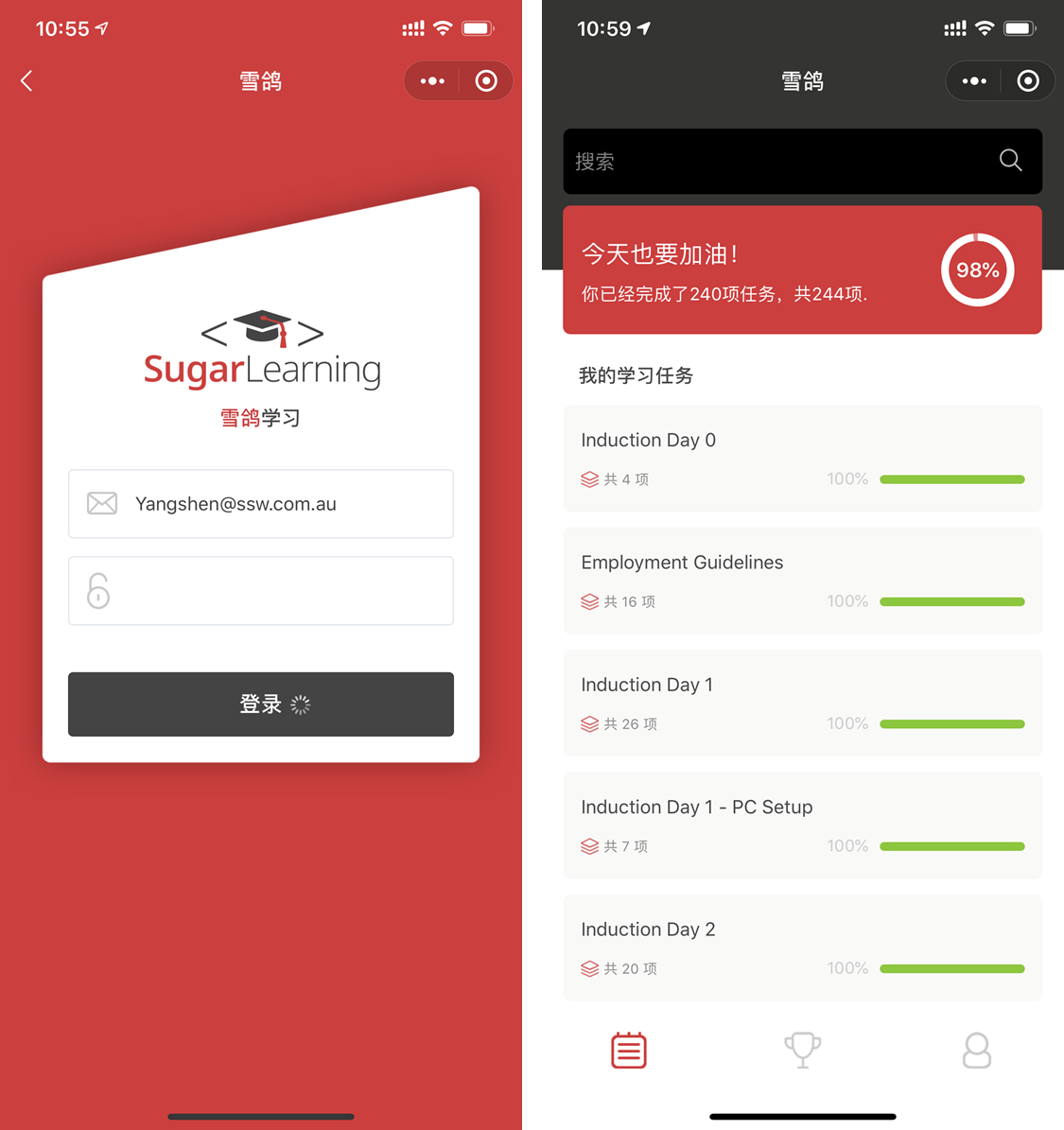
✅ Figure: Good example - SugarLearning, SSW's onboarding tool delivered through a WeChat Mini-Program
Key Advantages of a Mini-program
- No download needed - Opens instantly inside WeChat. Users don't have to install anything from an app store
- Cheaper to build - Development typically costs around 60% less than building a standalone app
- Plugs into the WeChat ecosystem - Works hand-in-hand with your other WeChat tools (Service Account, WeCom, etc.), so you can turn followers into paying customers without sending them elsewhere
- Build almost anything - Use it to run your own online store, SaaS portal, booking system, or membership hub
- **App-like performance - **Built on Tencent's proprietary dual-thread JavaScript framework, Mini Programs provide a smooth, responsive user experience without requiring a separate app download
6. 📈Do you need WeCom for your community?
Video: Key Benefits of WeCom
Think of WeCom as a more powerful version of Microsoft Teams or Slack: it handles both internal team collaboration and external customer engagement.
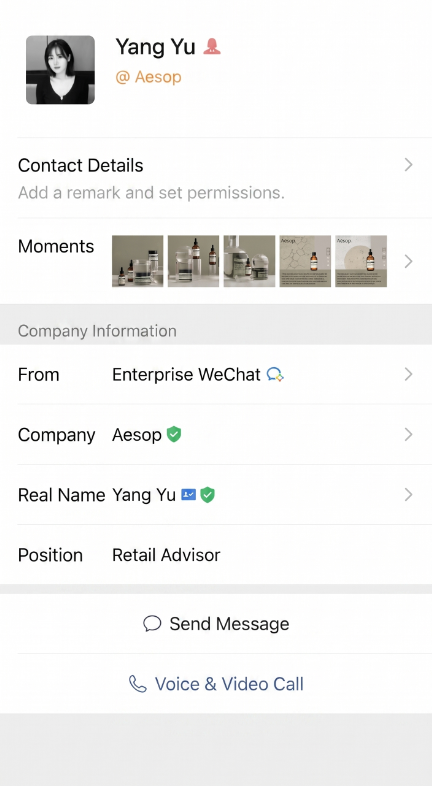
✅ Figure: Good example - A verified WeCom profile used for customer communication
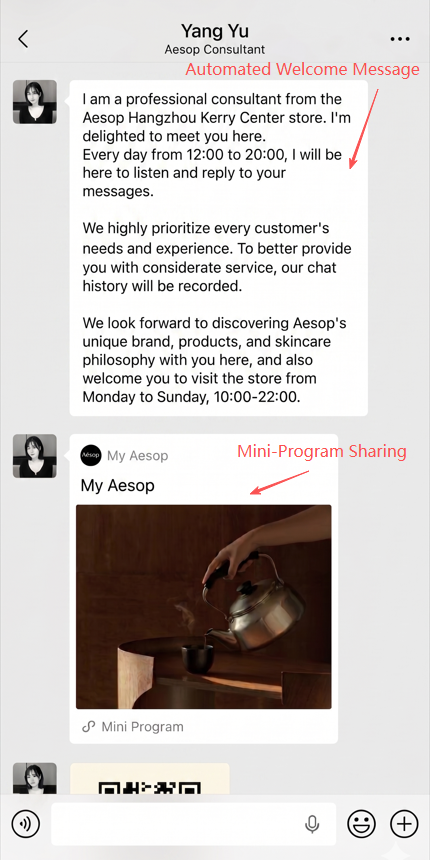
✅ Figure: Good example - WeCom account chat 1-on-1 with personal WeChat users (external customer)
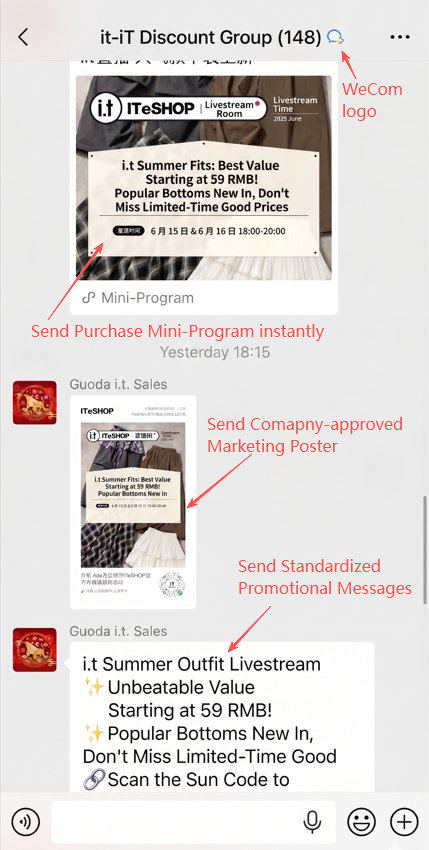
✅ Figure: Good example - WeCom centralized marketing asset distribution, allowing staff to share Mini Programs, promotional posters, and marketing copy across customer groups
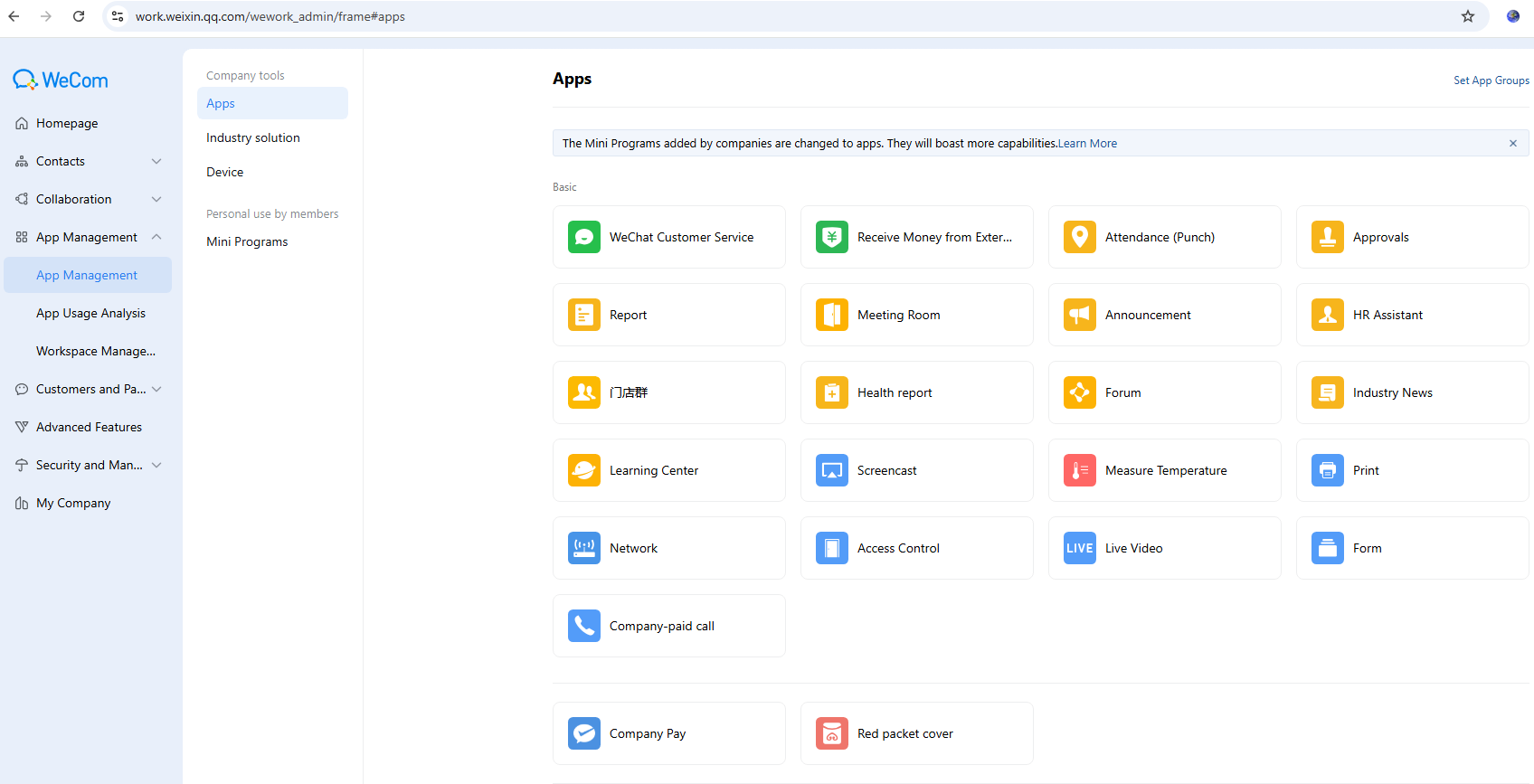
✅ Figure: Good example - The WeCom admin console for managing employees, customers, applications, and company settings
WeCom Key Advantages
- Reach external customers - Chat one-on-one with personal WeChat users compliantly, with a built-in sidebar that lets your team share sales scripts, marketing PDFs, and Mini-Programs in a single click
- Work together internally - Comes with built-in office tools (attendance, approvals) plus team features like video conferencing and shared cloud drives
- Stay in control - A web admin console gives you department-level data permissions, official company branding, and compliant chat-history auditing
7. WeChat vs WeCom - Key Differences
| WeChat (Personal) | WeCom (Enterprise WeChat) | |
| Built for | Personal social networking | Business collaboration & CRM |
| Contact limit | 10,000 contacts | Starts at 2,000 external contacts, expandable with paid quotas |
| Identity | Informal personal nickname | Verified company profile with official blue badge |
| Who owns the contacts | The individual | The company! Customers stay with you even when staff leave |
| Moments posts | Posted manually; users can easily mute or block | Company-prepared content pushed to customers' feeds |
| Analytics | None | Full dashboard - track growth, engagement, and customer churn |
| Integrations | Strictly banned | Open APIs (~200) for global CRMs, automation, and AI |
8. What are Moments Ads (💰Expensive)?
WeChat’s native feed ads display seamlessly within users’ personal timelines, functioning exactly like Instagram or Facebook Feed Ads.
Moments Ads are used by big companies like Volvo.
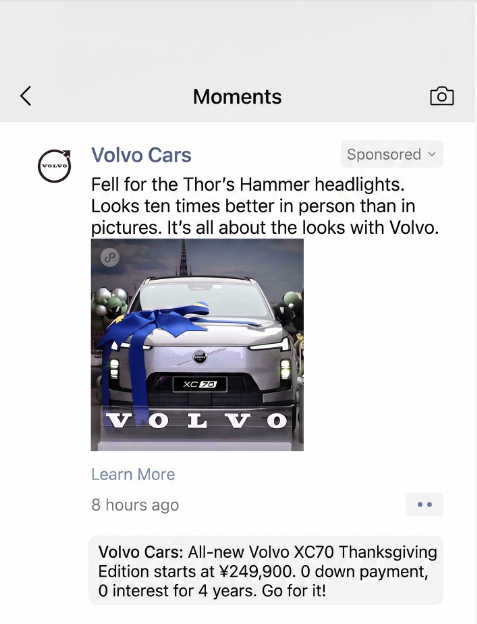
✅ Figure: Good example - Moments Ads are used by big companies like Volvo
Key Advantages of Moments Ads
- Precise Targeting - Reach users based on location, demographics, interests, and behavior
- Direct Conversion Paths - Drive users directly to a Mini-Program, Service Account, website, or landing page with a single tap
- Accessible for Overseas Companies - Through Tencent's International Advertiser program, overseas companies can run Moments Ads without establishing a China-based entity
Limitations
- **Higher Budget Requirements **- Moments Ads are generally better suited to medium and large campaigns
- **Limited Self-Service Options **- Most campaigns are managed through Tencent or an authorized agency
Industry Restrictions
- Allowed - E-commerce (retail, fashion, skincare), travel (hotels, airlines), consumer electronics, and luxury goods
- Restricted (case-by-case / whitelist approval) - Higher education, financial services, real estate, healthcare, and alcohol
- Prohibited - Pharmaceuticals, cryptocurrency, gambling, tobacco/e-cigarettes, adult content, and K-12 academic tutoring
Also, all ad creatives must strictly comply with China's Advertising Law and WeChat's ecosystem safety codes.
9. 🚫 Other WeChat Products (Limited or Unavailable for Overseas Companies)
Other WeChat products exist, but most overseas companies either cannot access them directly or have limited commercial value compared to the core stack above.
Here they are.
WeChat Official Account
The public content distribution and brand media hub within the WeChat ecosystem, focusing on broadcasting information.
Best for content-driven sectors (B2B, Consulting, SaaS, Media) to publish corporate news, industry insights, or technical manuals.
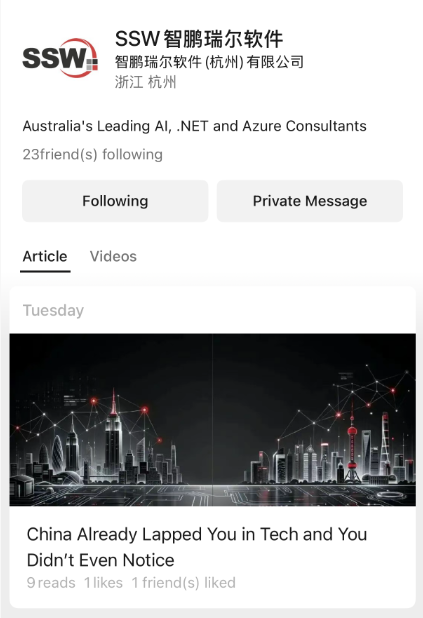
✅ Figure: Good example - This is the WeChat Official Account of SSW China. Since WeChat Official Accounts are currently not open to overseas businesses for registration, it must be applied for through a China-registered entity like this one
WeChat Livestream Commerce
Livestream commerce attaches Mini Program / WeChat Store product links to a channel's livestream.
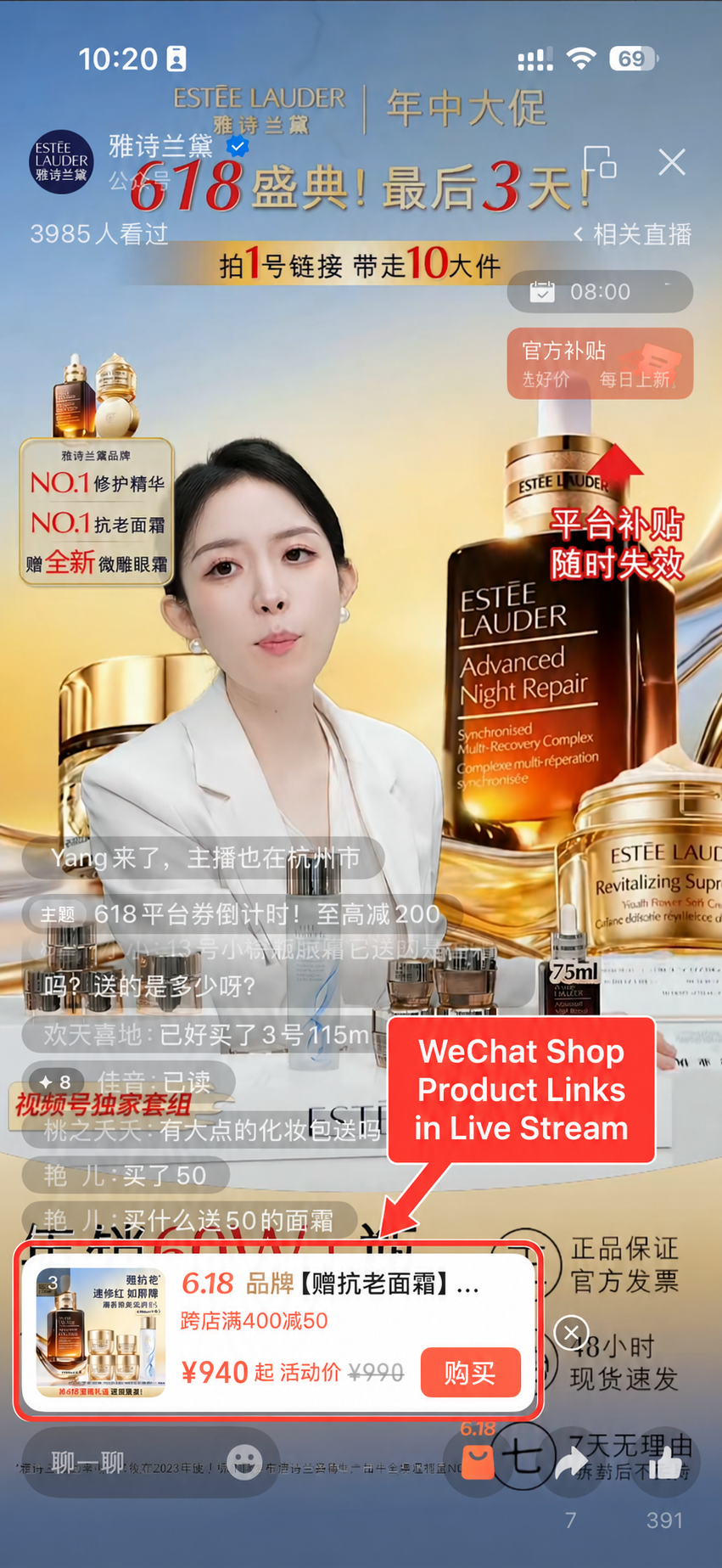
✅ Figure: Good example - Estée Lauder WeChat livestream with integrated WeChat Shop product links, allowing viewers to purchase products directly from the livestream interface
WeChat Store
The native, zero-coding official storefront within the WeChat ecosystem for streamlined social commerce.
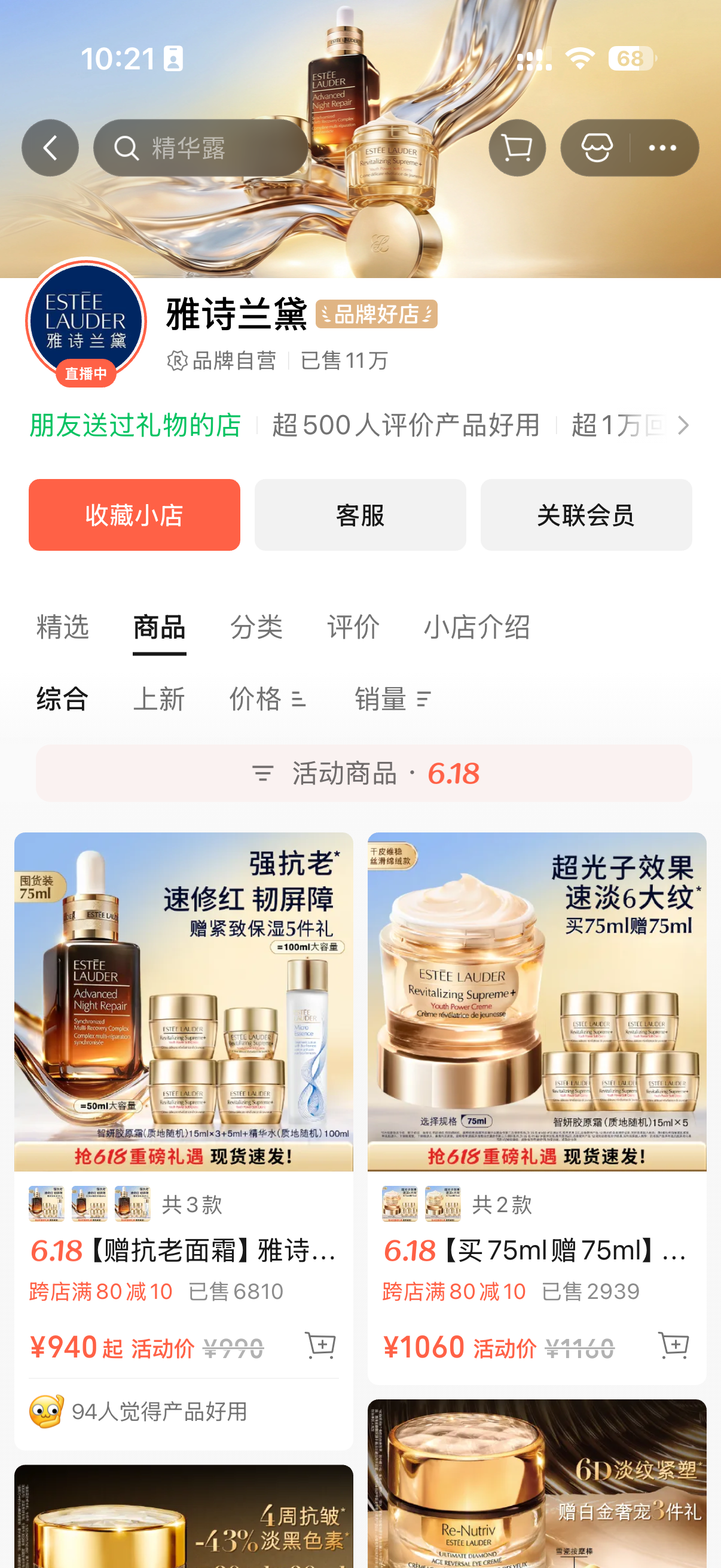
✅ Figure: Good example - Estée Lauder WeChat Store
10. 🔧 Getting Started with WeChat
(1) First Step - WeChat (personal) Account
A Personal WeChat Account is the ecosystem's foundational identity.
Think of it as your Personal Facebook Profile, but combined with an Apple ID & Stripe Master Admin.
We use a WeChat personal account to:
- Communicate - Access instant messaging, group chats, and social sharing (Moments)
- Admin - Register, manage, link, and pay for all services related to the WeChat ecosystem
(2) How to register a WeChat (personal) Account
Registering for WeChat is just like setting up a WhatsApp account. It’s tied to your mobile number.
- Download the App - Download WeChat from your local app store (e.g., App Store, Google Play)
- Enter Details - Select your country, enter your mobile number, and set a password
- SMS Activation - Enter the verification code received via SMS
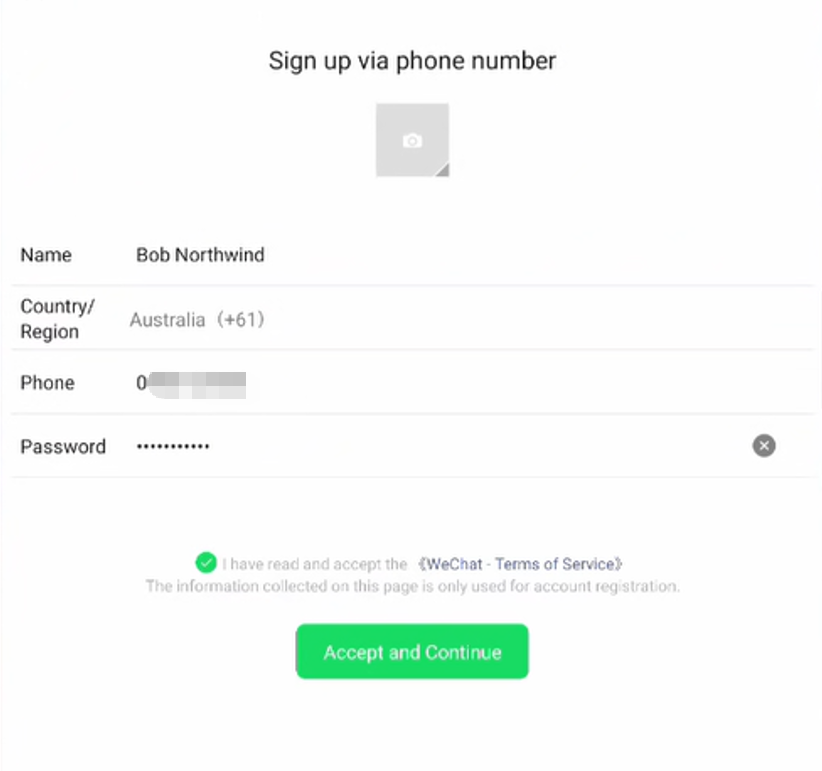
Figure: Input your user name, country, mobile number and password
⚠️ Potential Security Verification
To prevent fraud, WeChat might prompt you with one of these security checks during registration:
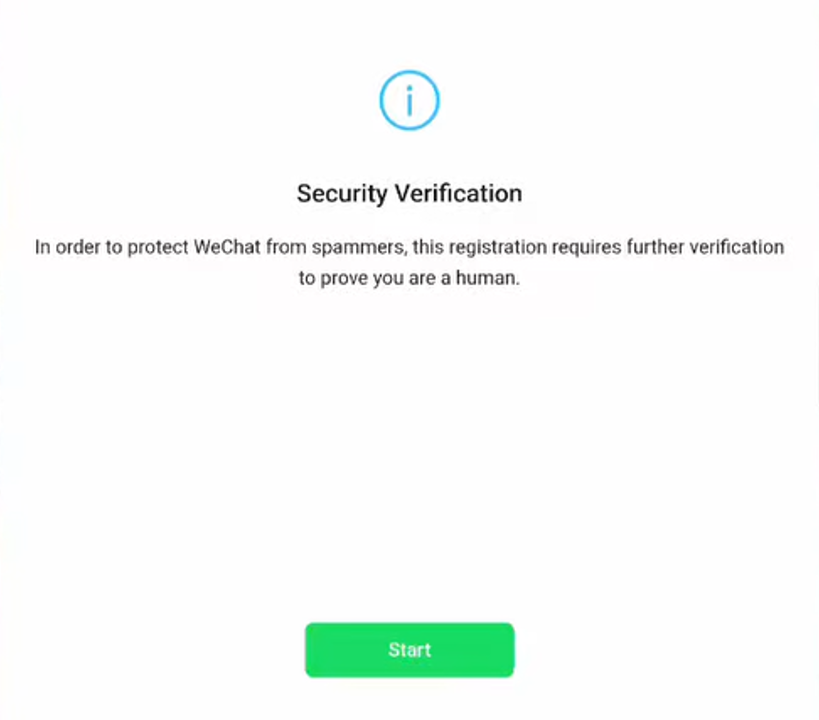
Figure: WeChat security verification
- Friend Assistance - An existing, identity-verified WeChat user must scan your registration QR code
- Bank Card Verification - If no friend is available, link your credit or debit card (Visa, Mastercard, or JCB) and send a specific SMS to a designated gateway number to finalize activation
💡 Crucial Anti-Fraud Tips
WeChat enforces strict fraud-prevention controls. To avoid instant account suspension:
Turn off all VPNs - Do not use VPNs, proxies, or network accelerators during registration. Use your regular local 4G/5G data or standard Wi-Fi
Keep your QR code private - Never post your registration QR code on public platforms for strangers to scan
Device Safety - Ensure your phone is not jailbroken (iOS) or rooted (Android)
(3) How to register a Service Account
Before you start
Requires a verified Personal WeChat account (via passport or bank card). Acts as Administrator.
- Create Account Portal - Go to the WeChat Official Accounts Platform, click "Register Now", select "Service Account" as your account type, and input your company email for admin login
- Bind Admin - Scan the QR code using a verified personal WeChat account to bind the admin, select your country/region, upload your local business registration document, and provide the admin's identity details (passport/local ID scan)
- Complete Official Verification - Sign up for WeChat's annual verification and pay the US$99 yearly fee. A third-party auditor will then contact you (usually within 5–7 business days) to confirm your details, after which your account goes live
(4) How to register a Mini-Program
Before you start
Requires a verified Personal WeChat account (via passport or bank card). Acts as Administrator.
🚶♂️➡️ Standard Flow (No Verified Service Account yet)
- Create your account - Go to the WeChat Official Accounts Platform, click "Register Now", choose "Mini-Program", and sign up with a corporate email
- Bind an admin & submit your details - Scan the QR code with a verified personal WeChat account to set the admin, pick your country/region, upload your business registration documents, and provide the admin's ID (passport or local ID scan)
- Complete verification - Sign up for WeChat's annual verification and pay the US$99 yearly fee. A third-party auditor will check your details (5–7 business days), and your developer access goes live once approved
🚀 Fast-Track Flow (With a Verified Service Account)
Bypass the manual setup and the $99 USD verification fee
- Open the integration panel - Log into your verified Service Account dashboard and find the "Mini-Program Management" section
- Authorize & reuse your existing details - Scan the authorization QR code with the master admin's real-name verified personal account, then choose to copy over your existing company verification and operator info
- Activate - Enter a new, separate corporate email for the Mini-Program login, and a fully verified Mini-Program developer account is created instantly
(5) How to register WeCom
Before you start
Requires a verified Personal WeChat account (via passport or bank card). Acts as Administrator.
🚶♂️➡️ Standard Flow (No Verified Service Account yet)
- Go to the site - Open the WeCom registration page in a desktop browser and select WeCom
- Enter company details - Add your company name, industry, and team size
- Verify by SMS - Enter your mobile number and complete the SMS verification
- Bind an admin - Scan the QR code with your verified WeChat account, set the administrator, and accept the terms to finish registering
- Verify your business (optional) - Submit your business registration certificate and the admin's ID/passport to unlock full CRM features (US$99 / year verification fee)
🚀 Fast-Track Flow (With a Verified Service Account)
Bypass manual setup and $99 USD verification fee
- Log In - Go to the WeCom Registration Page and sign in with your verified Service Account
- Open the menu - Click "WeCom" in the left-hand menu
- Choose authorization - Register via Service Account authorization, which auto-syncs your verified status and waives the fee
- Add admin details - Enter the administrator's real name and mobile number, then the SMS code
- Bind the admin - Scan the QR code with your verified WeChat account to set the administrator and instantly create a verified WeCom account
Summary
WeChat should be viewed as a business ecosystem rather than simply a social media platform.
For most international companies, the most practical approach is to start with a verified Service Account, add a Mini-Program when transactions are needed, use WeCom for customer relationship management, and leverage Moments Ads for growth and acquisition.
While some WeChat products remain unavailable to overseas entities, the core commercial tools are already accessible and sufficient for most businesses looking to establish a presence in the Chinese market.