Do you know the correct way to frame your subject?
Loading last updated info...
When filming a subject (or subjects) there are numerous ways to frame them.
Basic framing rules
- Keep subjects close - Avoid positioning people on opposite, far sides of the frame, as this can make them feel emotionally distant from each other. Distance appears larger on camera, so position your subjects as close together as they are comfortable with, especially when using tight framing or filming with one camera
- Use the rule of thirds - Imagine dividing the frame into 3 equal sections horizontally and vertically. The lines and intersections can be used to align important parts of the image, such as a person's eyes or face
- Avoid dead space - Do not leave too much empty space in the frame, especially when that space does not add meaning. This often happens when subjects are placed in front of a blank wall
- Avoid side-on angles - When possible, avoid filming directly side-on at 90 degrees to the subjects. This is especially important when using 2 or more cameras. Try to keep the camera as face-on to the subject as possible
- Choose an interesting background - Patterns, movement, depth, or objects in the background can help create a more engaging shot
- Avoid high contrast distractions - Bright hot spots or very dark areas can draw the viewer's attention away from the subject unless they are intentional
- Leave space in the direction people are looking - When one person is in the frame, or when 2 people are looking in the same direction, leave space in the direction they are looking. For example, if they are looking from left to right, place them on the left side of the frame
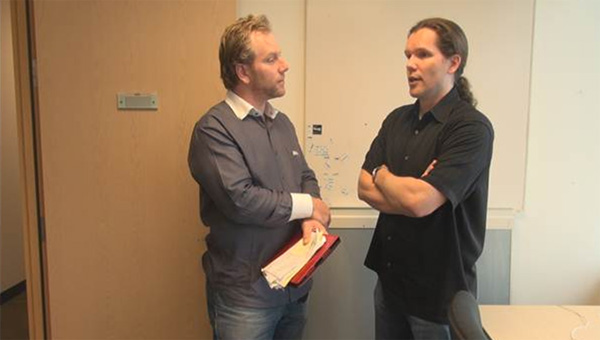
❌ Figure: Bad example - Too much dead space, the characters are unevenly placed, there is an uninteresting background, it's side on and the framing is too far out
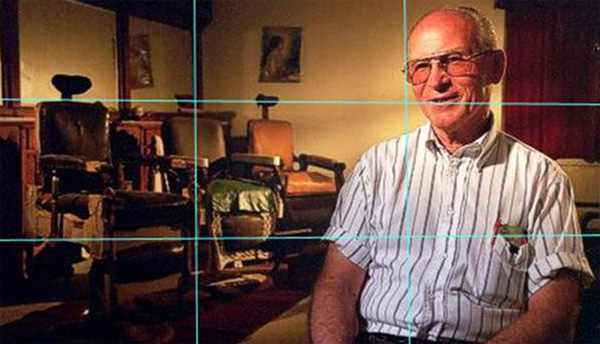
✅ Figure: Good example - The rule of thirds followed, mid-shot, interesting background, no dead space, fairly face on, subject placed on the right side because he's looking from right to left (leading room)
Subject positioning
When positioning your subjects it is important to remember several factors:
- It is a good idea (if you want to have one of your subjects more face on) to have the interviewee more face-on than the interviewer.
- The interviewer should be on the right side of the frame - you'll notice talk show hosts will always look right to left.
- The interviewer should avoid leaning into the interviewee too much as it might make them feel uncomfortable and seem a little weird in the frame.
- The best way to position your subjects is at 90° to each other and at 45° to the camera:
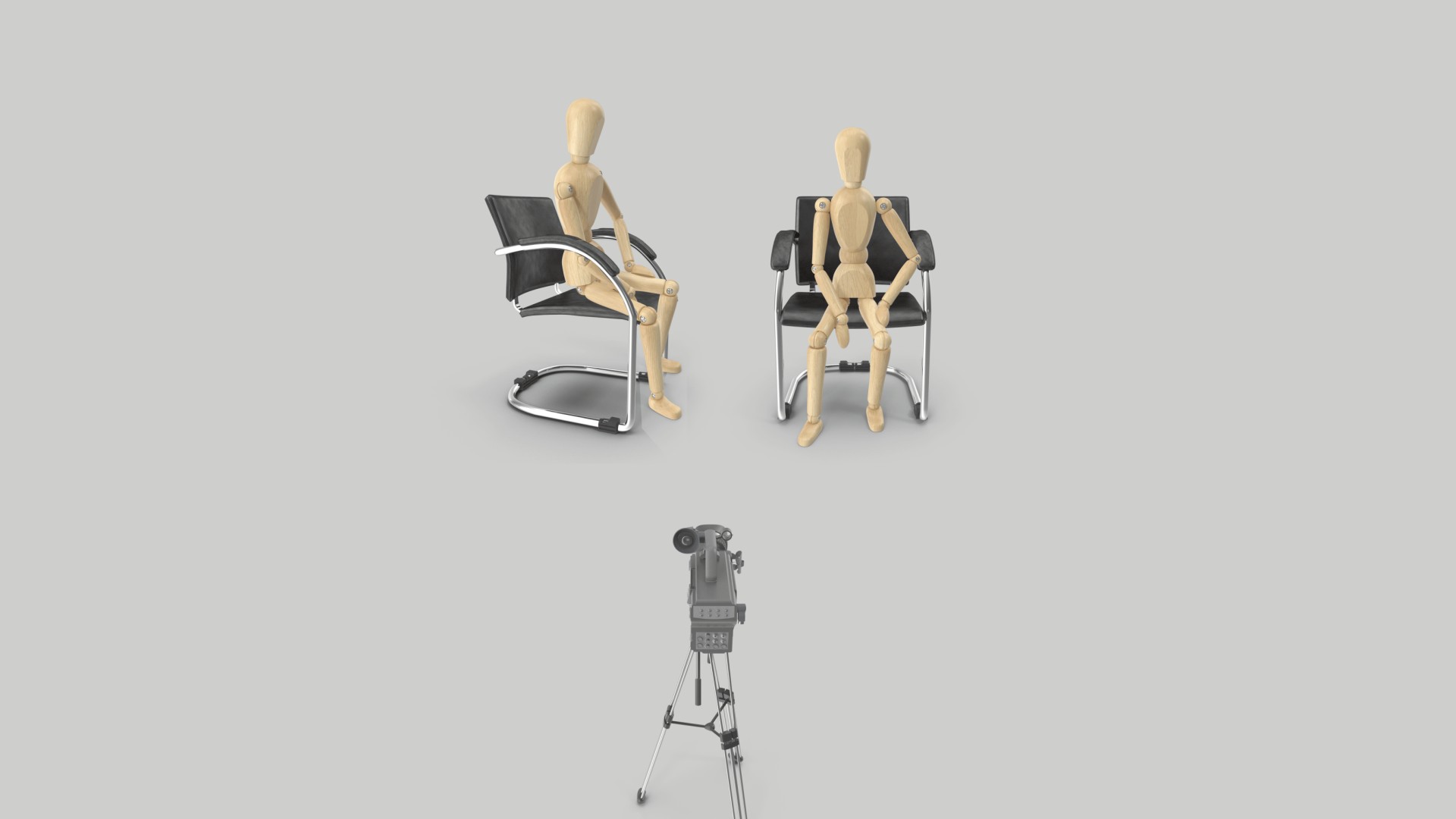
❌ Figure: Bad example - Interviewee (left) is facing toward the interviewer (right) too much and the interviewer is faced towards the camera too much
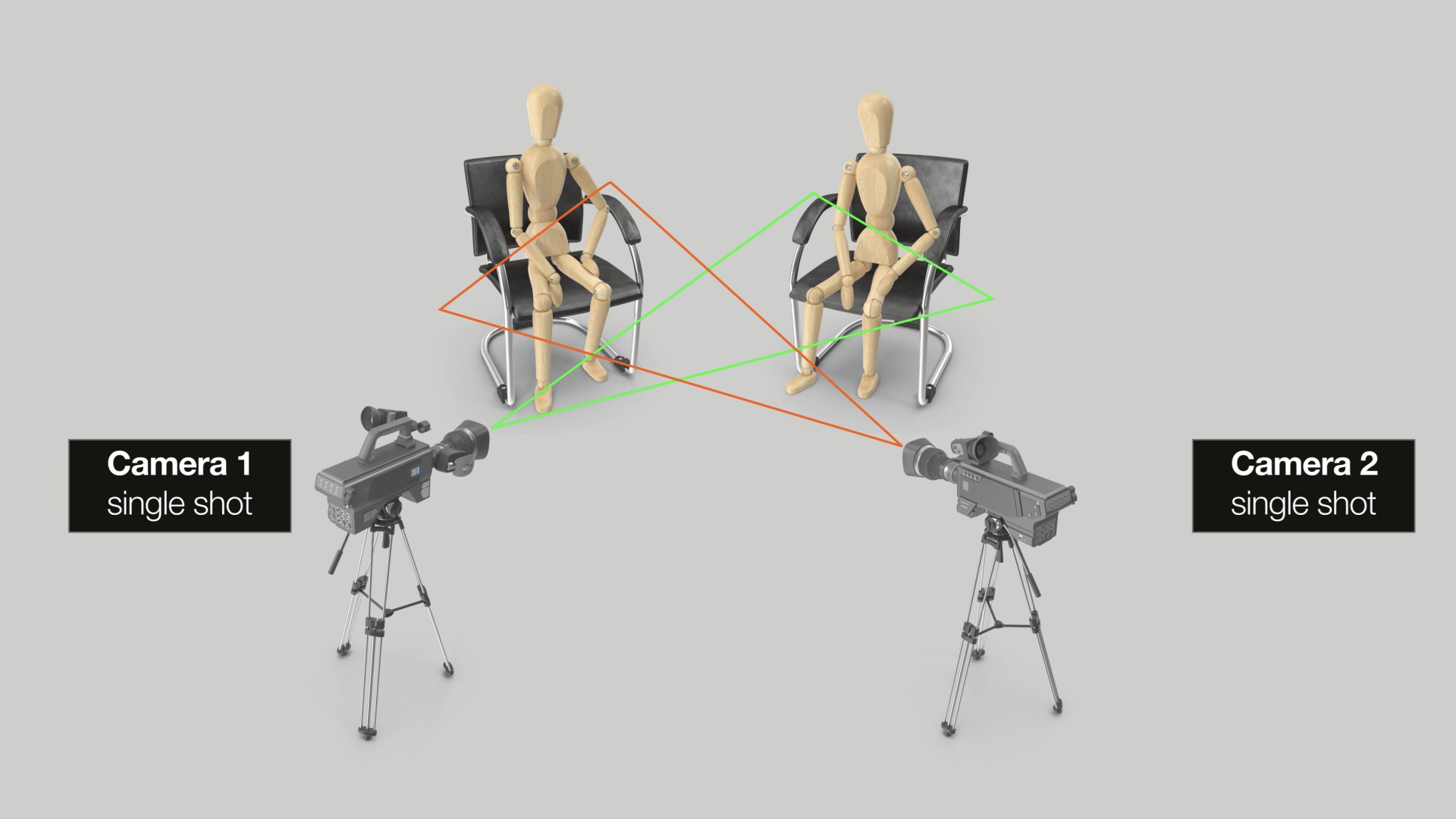
✅ Figure: Good example - Position your subjects properly to create an unbiased interview
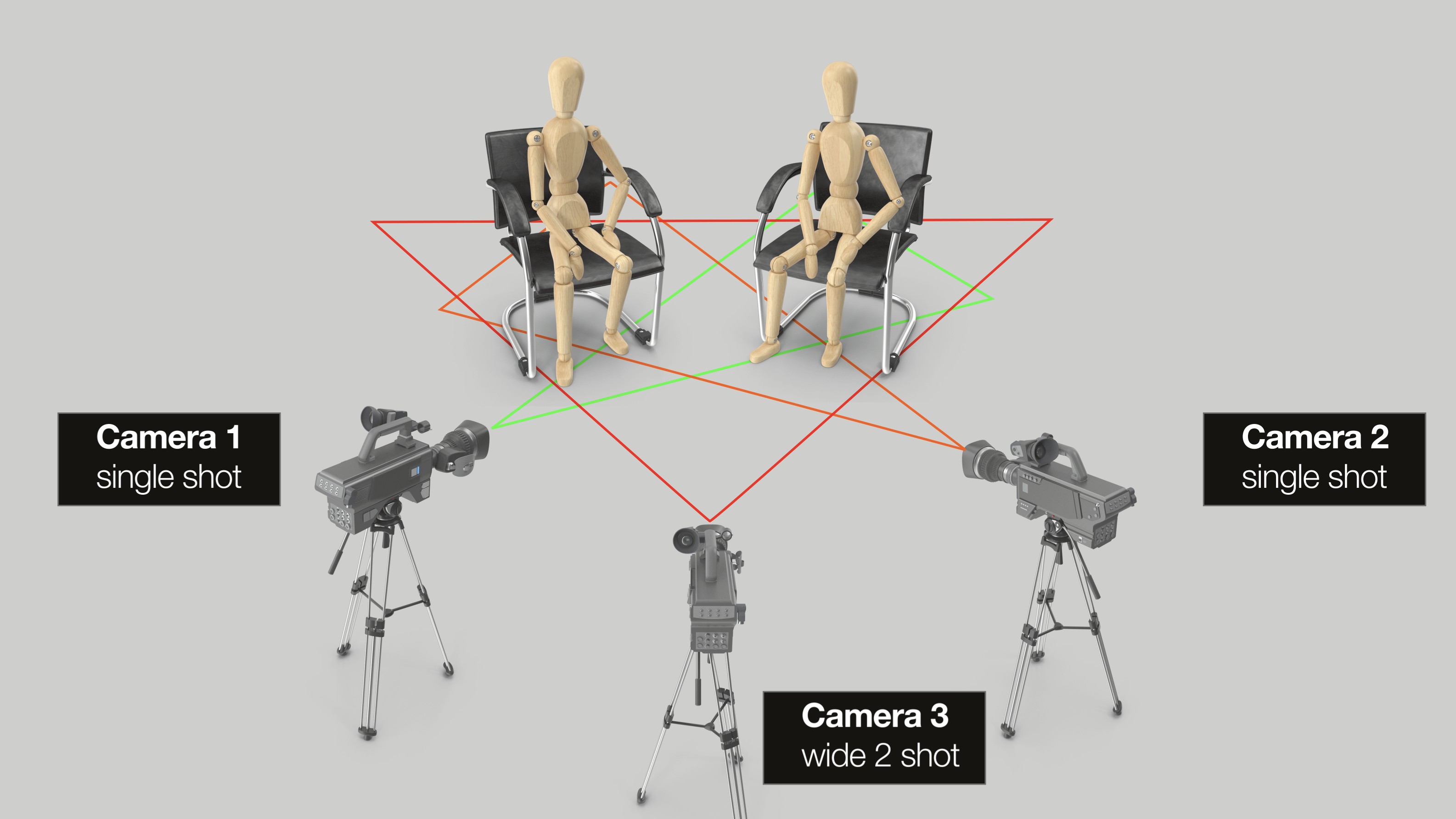
✅ Figure: Good example - Position of 3rd camera for a wide shot if available
Over the shoulder shots
When doing an over the shoulder shot (OTS) for a corporate video, it is generally best to stay at a level height with the subject. Looking up or down at them can create unnecessary meaning in the shot. It is also a good idea to avoid using the wide-angle setting on your camera as it makes the subject seem distant and small in comparison to the person whose shoulder we can see.

❌ Figure: Bad example - Looking down at the subject with a wide-angle lens setting

✅ Figure: Good example - Level height, zoom level not set to wide-angle
Mid-shots
For corporate and educational videos, a mid-shot usually works well. This typically frames the person from around the waist or belly button up.
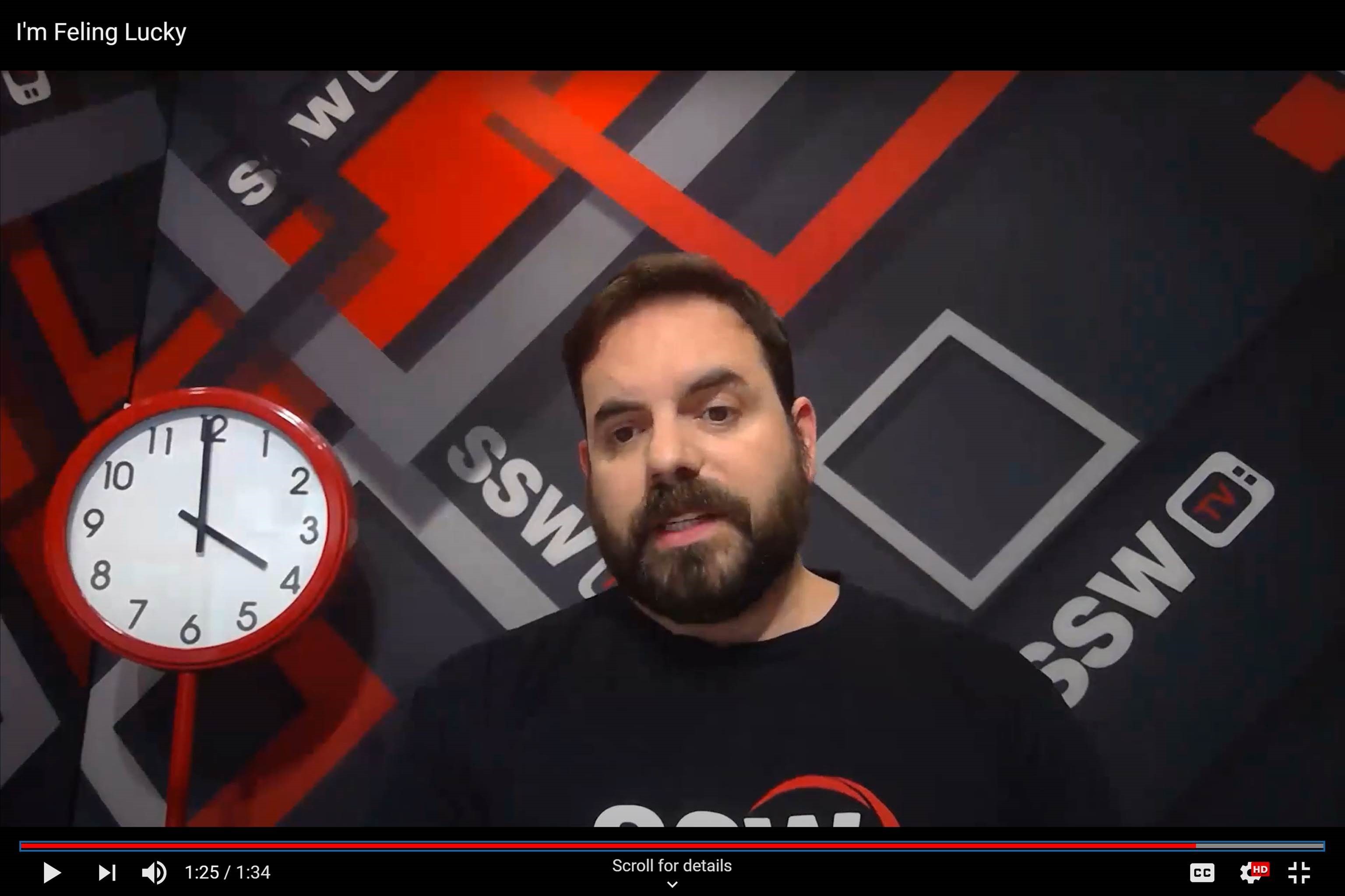
❌ Figure: Bad example - Head not close enough to the top and hand gestures not visible
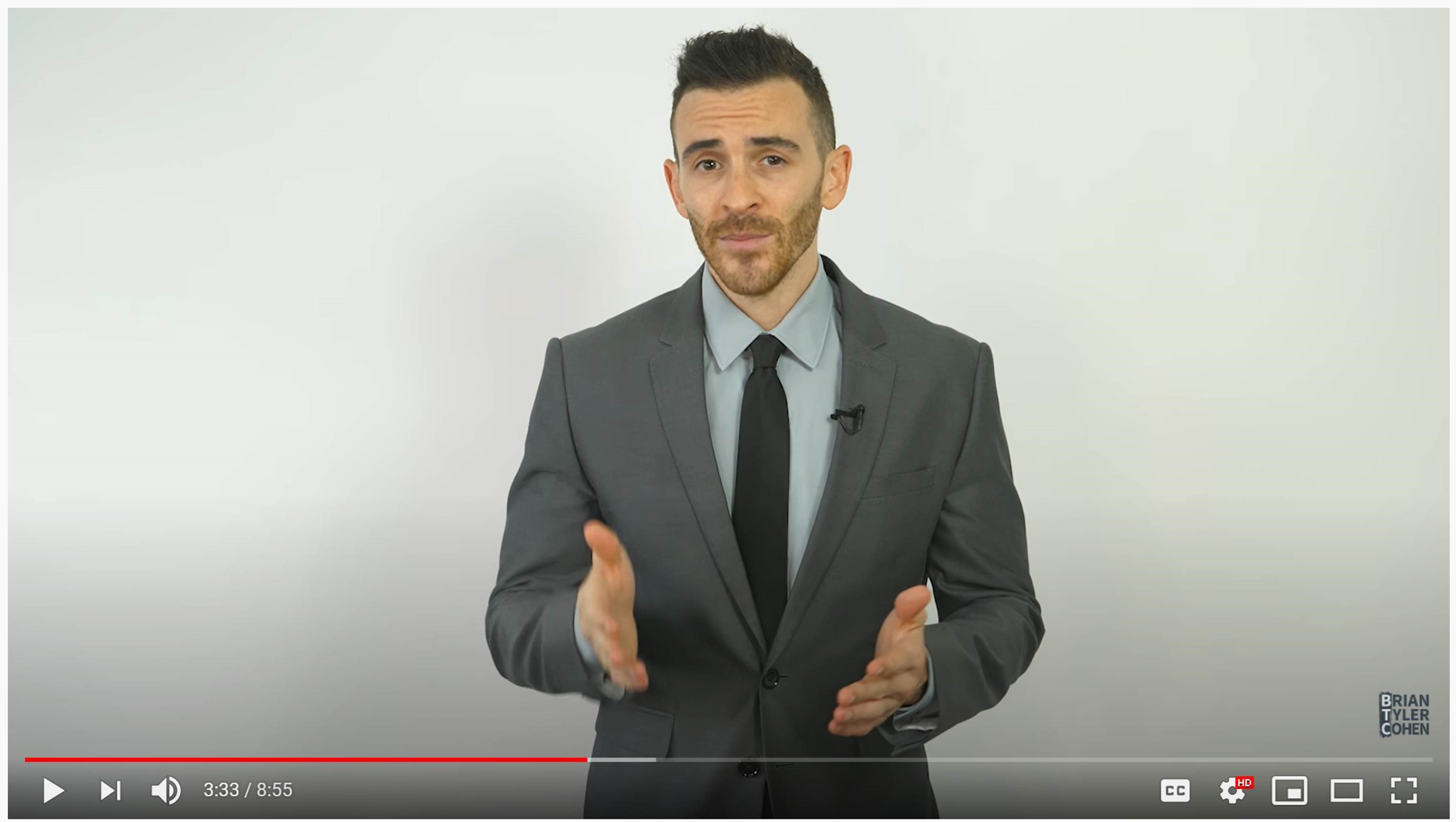
✅ Figure: Good example - Head close to the top and hand gestures visible